Baruch Spinoza (1632-1677): verschil tussen versies
Geen bewerkingssamenvatting |
Geen bewerkingssamenvatting |
||
| (3 tussenliggende versies door dezelfde gebruiker niet weergegeven) | |||
| Regel 1: | Regel 1: | ||
{{sys:infobox:persoon | {{sys:infobox:persoon | ||
|head=Baruch Spinoza | |head=Baruch Spinoza | ||
|url={{#tag:easyview|9En8PVj.jpg|thumbsize=300|blockfloat=true|head=Baruch Spinoza (1632-1677)|size=293| | |url={{#tag:easyview|9En8PVj.jpg|thumbsize=300|blockfloat=true|head=Baruch Spinoza (1632-1677)|size=293|captionref=Afbeelding afkomstig van [[{{sys:w:nl}}Baruch Spinoza|{{sys:w:name:nl}} ]]|spacing=false}} | ||
|googlemap={{#tag:easyview| | |googlemap={{#tag:easyview|Baruch_Spinoza_(1632-1677).kml|type=map|lat=52.215938|lon=4.548098|zoom=8|height=270}} | ||
|link=Baruch Spinoza (1632-1677):link | |link=Baruch Spinoza (1632-1677):link | ||
|semantic:aan=false | |semantic:aan=false | ||
}}{{sys:back|page=Filosofie}} | }}{{sys:back|page=Filosofie}} | ||
{{#tag:easytree| | {{#tag:easytree| | ||
Media | Media | ||
:2014 - Baruch Spinoza {{sys:w:lang:en}} | :2014 - Baruch Spinoza {{sys:w:lang:en}} | ||
::{{#tag:easyview|L2bMsB3k4EE|type=youtube|thumbnail={{ | ::{{#tag:easyview|L2bMsB3k4EE|type=youtube|thumbnail={{mdsr:icon}}media/video.png Part 1|head=[https://www.youtube.com/watch?v=L2bMsB3k4EE Baruch Spinoza Part 1]|des=Baruch Spinoza (24 November 1632 -- 21 February 1677) — later Benedict de Spinoza — was a Jewish-Dutch philosopher. Revealing considerable scientific aptitude, the breadth and importance of Spinoza's work was not fully realized until years after his death. By laying the groundwork for the 18th century Enlightenment and modern biblical criticism, he came to be considered one of the great rationalists of 17th-century philosophy. His magnum opus, the posthumous Ethics, in which he opposed Descartes's mind--body dualism, has earned him recognition as one of Western philosophy's most important contributors. In the Ethics, "Spinoza wrote the last indisputable Latin masterpiece, and one in which the refined conceptions of medieval philosophy are finally turned against themselves and destroyed entirely." Philosopher Georg Wilhelm Friedrich Hegel said of all contemporary philosophers, "You are either a Spinozist or not a philosopher at all." | ||
<br> | <br> | ||
Spinoza's name in different languages is Hebrew: ברוך שפינוזה Baruch Spinoza, Portuguese: Benedito or Bento de Espinosa and Latin: Benedictus de Spinoza; in all these languages, the given name means "the Blessed". Spinoza was raised in the Portuguese Jewish community in Amsterdam. He developed highly controversial ideas regarding the authenticity of the Hebrew Bible and the nature of the Divine. The Jewish religious authorities issued a cherem (Hebrew: חרם, a kind of ban, shunning, ostracism, expulsion, or excommunication) against him, effectively excluding him from Jewish society at age 23. His books were also later put on the Catholic Church's Index of Forbidden Books. | Spinoza's name in different languages is Hebrew: ברוך שפינוזה Baruch Spinoza, Portuguese: Benedito or Bento de Espinosa and Latin: Benedictus de Spinoza; in all these languages, the given name means "the Blessed". Spinoza was raised in the Portuguese Jewish community in Amsterdam. He developed highly controversial ideas regarding the authenticity of the Hebrew Bible and the nature of the Divine. The Jewish religious authorities issued a cherem (Hebrew: חרם, a kind of ban, shunning, ostracism, expulsion, or excommunication) against him, effectively excluding him from Jewish society at age 23. His books were also later put on the Catholic Church's Index of Forbidden Books. | ||
| Regel 17: | Regel 16: | ||
<br> | <br> | ||
Spinoza died at the age of 44 allegedly of a lung illness, perhaps tuberculosis or silicosis exacerbated by fine glass dust inhaled while grinding optical lenses. Spinoza is buried in the churchyard of the Christian Nieuwe Kerk in The Hague.|ref=Video afkomstig van [https://www.youtube.com/channel/UCNDuD8zHjwoooNT4h5vRpgA Philosophical Mindz]}} | Spinoza died at the age of 44 allegedly of a lung illness, perhaps tuberculosis or silicosis exacerbated by fine glass dust inhaled while grinding optical lenses. Spinoza is buried in the churchyard of the Christian Nieuwe Kerk in The Hague.|ref=Video afkomstig van [https://www.youtube.com/channel/UCNDuD8zHjwoooNT4h5vRpgA Philosophical Mindz]}} | ||
::{{#tag:easyview|oeJ07WwdAps|type=youtube|thumbnail={{ | ::{{#tag:easyview|oeJ07WwdAps|type=youtube|thumbnail={{mdsr:icon}}media/video.png Part 2|head=[https://www.youtube.com/watch?v=oeJ07WwdAps Baruch Spinoza Part 2]|des=Baruch Spinoza (24 November 1632 -- 21 February 1677) — later Benedict de Spinoza — was a Jewish-Dutch philosopher. Revealing considerable scientific aptitude, the breadth and importance of Spinoza's work was not fully realized until years after his death. By laying the groundwork for the 18th century Enlightenment and modern biblical criticism, he came to be considered one of the great rationalists of 17th-century philosophy. His magnum opus, the posthumous Ethics, in which he opposed Descartes's mind--body dualism, has earned him recognition as one of Western philosophy's most important contributors. In the Ethics, "Spinoza wrote the last indisputable Latin masterpiece, and one in which the refined conceptions of medieval philosophy are finally turned against themselves and destroyed entirely." Philosopher Georg Wilhelm Friedrich Hegel said of all contemporary philosophers, "You are either a Spinozist or not a philosopher at all." | ||
<br> | <br> | ||
Spinoza's name in different languages is Hebrew: ברוך שפינוזה Baruch Spinoza, Portuguese: Benedito or Bento de Espinosa and Latin: Benedictus de Spinoza; in all these languages, the given name means "the Blessed". Spinoza was raised in the Portuguese Jewish community in Amsterdam. He developed highly controversial ideas regarding the authenticity of the Hebrew Bible and the nature of the Divine. The Jewish religious authorities issued a cherem (Hebrew: חרם, a kind of ban, shunning, ostracism, expulsion, or excommunication) against him, effectively excluding him from Jewish society at age 23. His books were also later put on the Catholic Church's Index of Forbidden Books. | Spinoza's name in different languages is Hebrew: ברוך שפינוזה Baruch Spinoza, Portuguese: Benedito or Bento de Espinosa and Latin: Benedictus de Spinoza; in all these languages, the given name means "the Blessed". Spinoza was raised in the Portuguese Jewish community in Amsterdam. He developed highly controversial ideas regarding the authenticity of the Hebrew Bible and the nature of the Divine. The Jewish religious authorities issued a cherem (Hebrew: חרם, a kind of ban, shunning, ostracism, expulsion, or excommunication) against him, effectively excluding him from Jewish society at age 23. His books were also later put on the Catholic Church's Index of Forbidden Books. | ||
| Regel 24: | Regel 23: | ||
<br> | <br> | ||
Spinoza died at the age of 44 allegedly of a lung illness, perhaps tuberculosis or silicosis exacerbated by fine glass dust inhaled while grinding optical lenses. Spinoza is buried in the churchyard of the Christian Nieuwe Kerk in The Hague.|ref=Video afkomstig van [https://www.youtube.com/channel/UCNDuD8zHjwoooNT4h5vRpgA Philosophical Mindz]}} | Spinoza died at the age of 44 allegedly of a lung illness, perhaps tuberculosis or silicosis exacerbated by fine glass dust inhaled while grinding optical lenses. Spinoza is buried in the churchyard of the Christian Nieuwe Kerk in The Hague.|ref=Video afkomstig van [https://www.youtube.com/channel/UCNDuD8zHjwoooNT4h5vRpgA Philosophical Mindz]}} | ||
::{{#tag:easyview|5stWqyjjaBM|type=youtube|thumbnail={{ | ::{{#tag:easyview|5stWqyjjaBM|type=youtube|thumbnail={{mdsr:icon}}media/video.png Part 3|head=[https://www.youtube.com/watch?v=5stWqyjjaBM Baruch Spinoza Part 3]|des=Baruch Spinoza (24 November 1632 -- 21 February 1677) — later Benedict de Spinoza — was a Jewish-Dutch philosopher. Revealing considerable scientific aptitude, the breadth and importance of Spinoza's work was not fully realized until years after his death. By laying the groundwork for the 18th century Enlightenment and modern biblical criticism, he came to be considered one of the great rationalists of 17th-century philosophy. His magnum opus, the posthumous Ethics, in which he opposed Descartes's mind--body dualism, has earned him recognition as one of Western philosophy's most important contributors. In the Ethics, "Spinoza wrote the last indisputable Latin masterpiece, and one in which the refined conceptions of medieval philosophy are finally turned against themselves and destroyed entirely." Philosopher Georg Wilhelm Friedrich Hegel said of all contemporary philosophers, "You are either a Spinozist or not a philosopher at all." | ||
<br> | <br> | ||
Spinoza's name in different languages is Hebrew: ברוך שפינוזה Baruch Spinoza, Portuguese: Benedito or Bento de Espinosa and Latin: Benedictus de Spinoza; in all these languages, the given name means "the Blessed". Spinoza was raised in the Portuguese Jewish community in Amsterdam. He developed highly controversial ideas regarding the authenticity of the Hebrew Bible and the nature of the Divine. The Jewish religious authorities issued a cherem (Hebrew: חרם, a kind of ban, shunning, ostracism, expulsion, or excommunication) against him, effectively excluding him from Jewish society at age 23. His books were also later put on the Catholic Church's Index of Forbidden Books. | Spinoza's name in different languages is Hebrew: ברוך שפינוזה Baruch Spinoza, Portuguese: Benedito or Bento de Espinosa and Latin: Benedictus de Spinoza; in all these languages, the given name means "the Blessed". Spinoza was raised in the Portuguese Jewish community in Amsterdam. He developed highly controversial ideas regarding the authenticity of the Hebrew Bible and the nature of the Divine. The Jewish religious authorities issued a cherem (Hebrew: חרם, a kind of ban, shunning, ostracism, expulsion, or excommunication) against him, effectively excluding him from Jewish society at age 23. His books were also later put on the Catholic Church's Index of Forbidden Books. | ||
| Regel 31: | Regel 30: | ||
<br> | <br> | ||
Spinoza died at the age of 44 allegedly of a lung illness, perhaps tuberculosis or silicosis exacerbated by fine glass dust inhaled while grinding optical lenses. Spinoza is buried in the churchyard of the Christian Nieuwe Kerk in The Hague.|ref=Video afkomstig van [https://www.youtube.com/channel/UCNDuD8zHjwoooNT4h5vRpgA Philosophical Mindz]}} | Spinoza died at the age of 44 allegedly of a lung illness, perhaps tuberculosis or silicosis exacerbated by fine glass dust inhaled while grinding optical lenses. Spinoza is buried in the churchyard of the Christian Nieuwe Kerk in The Hague.|ref=Video afkomstig van [https://www.youtube.com/channel/UCNDuD8zHjwoooNT4h5vRpgA Philosophical Mindz]}} | ||
::{{#tag:easyview|WwNX_wUAjoQ|type=youtube|thumbnail={{ | ::{{#tag:easyview|WwNX_wUAjoQ|type=youtube|thumbnail={{mdsr:icon}}media/video.png Part 4|head=[https://www.youtube.com/watch?v=WwNX_wUAjoQ Baruch Spinoza Part 4]|des=Baruch Spinoza (24 November 1632 -- 21 February 1677) — later Benedict de Spinoza — was a Jewish-Dutch philosopher. Revealing considerable scientific aptitude, the breadth and importance of Spinoza's work was not fully realized until years after his death. By laying the groundwork for the 18th century Enlightenment and modern biblical criticism, he came to be considered one of the great rationalists of 17th-century philosophy. His magnum opus, the posthumous Ethics, in which he opposed Descartes's mind--body dualism, has earned him recognition as one of Western philosophy's most important contributors. In the Ethics, "Spinoza wrote the last indisputable Latin masterpiece, and one in which the refined conceptions of medieval philosophy are finally turned against themselves and destroyed entirely." Philosopher Georg Wilhelm Friedrich Hegel said of all contemporary philosophers, "You are either a Spinozist or not a philosopher at all." | ||
<br> | <br> | ||
Spinoza's name in different languages is Hebrew: ברוך שפינוזה Baruch Spinoza, Portuguese: Benedito or Bento de Espinosa and Latin: Benedictus de Spinoza; in all these languages, the given name means "the Blessed". Spinoza was raised in the Portuguese Jewish community in Amsterdam. He developed highly controversial ideas regarding the authenticity of the Hebrew Bible and the nature of the Divine. The Jewish religious authorities issued a cherem (Hebrew: חרם, a kind of ban, shunning, ostracism, expulsion, or excommunication) against him, effectively excluding him from Jewish society at age 23. His books were also later put on the Catholic Church's Index of Forbidden Books. | Spinoza's name in different languages is Hebrew: ברוך שפינוזה Baruch Spinoza, Portuguese: Benedito or Bento de Espinosa and Latin: Benedictus de Spinoza; in all these languages, the given name means "the Blessed". Spinoza was raised in the Portuguese Jewish community in Amsterdam. He developed highly controversial ideas regarding the authenticity of the Hebrew Bible and the nature of the Divine. The Jewish religious authorities issued a cherem (Hebrew: חרם, a kind of ban, shunning, ostracism, expulsion, or excommunication) against him, effectively excluding him from Jewish society at age 23. His books were also later put on the Catholic Church's Index of Forbidden Books. | ||
| Regel 38: | Regel 37: | ||
<br> | <br> | ||
Spinoza died at the age of 44 allegedly of a lung illness, perhaps tuberculosis or silicosis exacerbated by fine glass dust inhaled while grinding optical lenses. Spinoza is buried in the churchyard of the Christian Nieuwe Kerk in The Hague.|ref=Video afkomstig van [https://www.youtube.com/channel/UCNDuD8zHjwoooNT4h5vRpgA Philosophical Mindz]}} | Spinoza died at the age of 44 allegedly of a lung illness, perhaps tuberculosis or silicosis exacerbated by fine glass dust inhaled while grinding optical lenses. Spinoza is buried in the churchyard of the Christian Nieuwe Kerk in The Hague.|ref=Video afkomstig van [https://www.youtube.com/channel/UCNDuD8zHjwoooNT4h5vRpgA Philosophical Mindz]}} | ||
::{{#tag:easyview|fuS6UlZnZ2o|type=youtube|thumbnail={{ | ::{{#tag:easyview|fuS6UlZnZ2o|type=youtube|thumbnail={{mdsr:icon}}media/video.png Part 5|head=[https://www.youtube.com/watch?v=fuS6UlZnZ2o Baruch Spinoza Part 5]|des=Baruch Spinoza (24 November 1632 -- 21 February 1677) — later Benedict de Spinoza — was a Jewish-Dutch philosopher. Revealing considerable scientific aptitude, the breadth and importance of Spinoza's work was not fully realized until years after his death. By laying the groundwork for the 18th century Enlightenment and modern biblical criticism, he came to be considered one of the great rationalists of 17th-century philosophy. His magnum opus, the posthumous Ethics, in which he opposed Descartes's mind--body dualism, has earned him recognition as one of Western philosophy's most important contributors. In the Ethics, "Spinoza wrote the last indisputable Latin masterpiece, and one in which the refined conceptions of medieval philosophy are finally turned against themselves and destroyed entirely." Philosopher Georg Wilhelm Friedrich Hegel said of all contemporary philosophers, "You are either a Spinozist or not a philosopher at all." | ||
<br> | <br> | ||
Spinoza's name in different languages is Hebrew: ברוך שפינוזה Baruch Spinoza, Portuguese: Benedito or Bento de Espinosa and Latin: Benedictus de Spinoza; in all these languages, the given name means "the Blessed". Spinoza was raised in the Portuguese Jewish community in Amsterdam. He developed highly controversial ideas regarding the authenticity of the Hebrew Bible and the nature of the Divine. The Jewish religious authorities issued a cherem (Hebrew: חרם, a kind of ban, shunning, ostracism, expulsion, or excommunication) against him, effectively excluding him from Jewish society at age 23. His books were also later put on the Catholic Church's Index of Forbidden Books. | Spinoza's name in different languages is Hebrew: ברוך שפינוזה Baruch Spinoza, Portuguese: Benedito or Bento de Espinosa and Latin: Benedictus de Spinoza; in all these languages, the given name means "the Blessed". Spinoza was raised in the Portuguese Jewish community in Amsterdam. He developed highly controversial ideas regarding the authenticity of the Hebrew Bible and the nature of the Divine. The Jewish religious authorities issued a cherem (Hebrew: חרם, a kind of ban, shunning, ostracism, expulsion, or excommunication) against him, effectively excluding him from Jewish society at age 23. His books were also later put on the Catholic Church's Index of Forbidden Books. | ||
| Regel 45: | Regel 44: | ||
<br> | <br> | ||
Spinoza died at the age of 44 allegedly of a lung illness, perhaps tuberculosis or silicosis exacerbated by fine glass dust inhaled while grinding optical lenses. Spinoza is buried in the churchyard of the Christian Nieuwe Kerk in The Hague.|ref=Video afkomstig van [https://www.youtube.com/channel/UCNDuD8zHjwoooNT4h5vRpgA Philosophical Mindz]}} | Spinoza died at the age of 44 allegedly of a lung illness, perhaps tuberculosis or silicosis exacerbated by fine glass dust inhaled while grinding optical lenses. Spinoza is buried in the churchyard of the Christian Nieuwe Kerk in The Hague.|ref=Video afkomstig van [https://www.youtube.com/channel/UCNDuD8zHjwoooNT4h5vRpgA Philosophical Mindz]}} | ||
::{{#tag:easyview|P8xUVl0d6Mg|type=youtube|thumbnail={{ | ::{{#tag:easyview|P8xUVl0d6Mg|type=youtube|thumbnail={{mdsr:icon}}media/video.png Part 5|head=[https://www.youtube.com/watch?v=P8xUVl0d6Mg Baruch Spinoza Part 5]|des=An audio excerpt from Spinoza's Tractatus Theologico-Politicus|ref=Video afkomstig van [http://www.youtube.com/user/alifeofreason alifeofreason]}} | ||
:{{#tag:easyview|c0qH0ztl630|type=youtube|thumbnail=2014 - {{ | :{{#tag:easyview|c0qH0ztl630|type=youtube|thumbnail=2014 - {{mdsr:icon}}media/video.png A Theologico-Political Treatise (FULL Audiobook)|head=[https://www.youtube.com/watch?v=c0qH0ztl630 A Theologico-Political Treatise (FULL Audiobook)]|ref=Video afkomstig van [https://www.youtube.com/channel/UCA8Bg-tQKShZRZhe610SC-Q FULL audio books for everyone]}} | ||
:2008 - Anthony Quinton on Spinoza and Leibniz | :2008 - Anthony Quinton on Spinoza and Leibniz | ||
::{{#tag:easyview|GmbGbo-oyKc|type=youtube|thumbnail={{ | ::{{#tag:easyview|GmbGbo-oyKc|type=youtube|thumbnail={{mdsr:icon}}media/video.png section 1|head=[https://www.youtube.com/watch?v=GmbGbo-oyKc Anthony Quinton on Spinoza and Leibniz section 1]|des=The ideas of rationalist philosophers Baruch Spinoza and Gottfried Leibniz are examined in this program by philosophy [[{{sys:w:en}}Anthony Quinton|Anthony Quinton]]. Spinoza favors a pantheistic God who has matter and mind as two attributes, and who is the ultimate substance and explanation of the world. Leibniz sees the real world as consisting of an infinity of things purely spiritual, where everything, including space, is a phenomenon—a by-product of areal world with an infinite array of spiritual centers. Both philosophers construct a world that is very different form what the average person perceives, and both reject [[{{sys:w:nl}}Dualisme_(filosofie_van_de_geest)|Cartesian duality]].|ref=Video afkomstig van Video afkomstig van [http://www.youtube.com/user/flame0430 flame0430]}} | ||
::{{#tag:easyview|MHaHCxsMy28|type=youtube|thumbnail={{ | ::{{#tag:easyview|MHaHCxsMy28|type=youtube|thumbnail={{mdsr:icon}}media/video.png section 2|head=[https://www.youtube.com/watch?v=MHaHCxsMy28 Anthony Quinton on Spinoza and Leibniz section 2]|des=The ideas of rationalist philosophers Baruch Spinoza and Gottfried Leibniz are examined in this program by philosophy [[{{sys:w:en}}Anthony Quinton|Anthony Quinton]]. Spinoza favors a pantheistic God who has matter and mind as two attributes, and who is the ultimate substance and explanation of the world. Leibniz sees the real world as consisting of an infinity of things purely spiritual, where everything, including space, is a phenomenon—a by-product of areal world with an infinite array of spiritual centers. Both philosophers construct a world that is very different form what the average person perceives, and both reject [[{{sys:w:nl}}Dualisme_(filosofie_van_de_geest)|Cartesian duality]].|ref=Video afkomstig van Video afkomstig van [http://www.youtube.com/user/flame0430 flame0430]}} | ||
::{{#tag:easyview|NB4FVwy5OI4|type=youtube|thumbnail={{ | ::{{#tag:easyview|NB4FVwy5OI4|type=youtube|thumbnail={{mdsr:icon}}media/video.png section 3|head=[https://www.youtube.com/watch?v=NB4FVwy5OI4 Anthony Quinton on Spinoza and Leibniz section 3]|des=The ideas of rationalist philosophers Baruch Spinoza and Gottfried Leibniz are examined in this program by philosophy [[{{sys:w:en}}Anthony Quinton|Anthony Quinton]]. Spinoza favors a pantheistic God who has matter and mind as two attributes, and who is the ultimate substance and explanation of the world. Leibniz sees the real world as consisting of an infinity of things purely spiritual, where everything, including space, is a phenomenon—a by-product of areal world with an infinite array of spiritual centers. Both philosophers construct a world that is very different form what the average person perceives, and both reject [[{{sys:w:nl}}Dualisme_(filosofie_van_de_geest)|Cartesian duality]].|ref=Video afkomstig van Video afkomstig van [http://www.youtube.com/user/flame0430 flame0430]}} | ||
::{{#tag:easyview|bB5JhqIpN24|type=youtube|thumbnail={{ | ::{{#tag:easyview|bB5JhqIpN24|type=youtube|thumbnail={{mdsr:icon}}media/video.png section 4|head=[https://www.youtube.com/watch?v=bB5JhqIpN24 Anthony Quinton on Spinoza and Leibniz section 4]|des=The ideas of rationalist philosophers Baruch Spinoza and Gottfried Leibniz are examined in this program by philosophy [[{{sys:w:en}}Anthony Quinton|Anthony Quinton]]. Spinoza favors a pantheistic God who has matter and mind as two attributes, and who is the ultimate substance and explanation of the world. Leibniz sees the real world as consisting of an infinity of things purely spiritual, where everything, including space, is a phenomenon—a by-product of areal world with an infinite array of spiritual centers. Both philosophers construct a world that is very different form what the average person perceives, and both reject [[{{sys:w:nl}}Dualisme_(filosofie_van_de_geest)|Cartesian duality]].|ref=Video afkomstig van Video afkomstig van [http://www.youtube.com/user/flame0430 flame0430]}} | ||
::{{#tag:easyview|dFqSGFE7Crc|type=youtube|thumbnail={{ | ::{{#tag:easyview|dFqSGFE7Crc|type=youtube|thumbnail={{mdsr:icon}}media/video.png section 5|head=[https://www.youtube.com/watch?v=dFqSGFE7Crc Anthony Quinton on Spinoza and Leibniz section 5]|des=The ideas of rationalist philosophers Baruch Spinoza and Gottfried Leibniz are examined in this program by philosophy [[{{sys:w:en}}Anthony Quinton|Anthony Quinton]]. Spinoza favors a pantheistic God who has matter and mind as two attributes, and who is the ultimate substance and explanation of the world. Leibniz sees the real world as consisting of an infinity of things purely spiritual, where everything, including space, is a phenomenon—a by-product of areal world with an infinite array of spiritual centers. Both philosophers construct a world that is very different form what the average person perceives, and both reject [[{{sys:w:nl}}Dualisme_(filosofie_van_de_geest)|Cartesian duality]].|ref=Video afkomstig van Video afkomstig van [http://www.youtube.com/user/flame0430 flame0430]}} | ||
|size=18 | |size=18 | ||
}} | }} | ||
Huidige versie van 4 jun 2026 om 07:25
| Baruch Spinoza | |
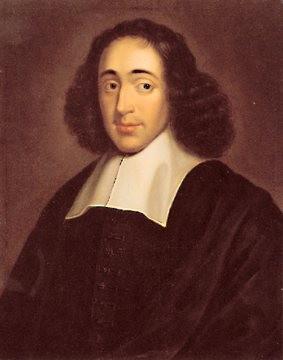 Afbeelding afkomstig van Wikipedia (Nederlands) Afbeelding afkomstig van Wikipedia (Nederlands)
| |
| Externe links | |
| Geo | |
Terug naar Filosofie
 Part 1