Ayn Rand (1905-1982): verschil tussen versies
Geen bewerkingssamenvatting |
Geen bewerkingssamenvatting |
||
| Regel 104: | Regel 104: | ||
}}{{#tag:easytree| | }}{{#tag:easytree| | ||
Media | Media | ||
:{{#tag:easyview|b-tIY99QFFk|type=youtube|thumbnail=2008 - {{mdsr:icon}}media/video.png Stephen Colbert versus Ayn Rand {{sys:w:lang:en}}|group=Middle East|head=[[{{sys:w:en}}Stephen Colbert|Stephen Colbert]] versus Ayn Rand|ref=Video afkomstig van [http://www.youtube.com/user/LiberalViewer LiberalViewer]}} | |||
:{{#tag:easyview|iPspvwQrT1E|type=youtube|thumbnail=2008 - {{mdsr:icon}}media/video.png Ayn Rand on Religion |group=Ayn Rand on Religion|head=On Religion|ref=Video afkomstig van [http://www.youtube.com/user/WildPeru WildPeru]}} | |||
:{{#tag:easyview|2uHSv1asFvU|type=youtube|thumbnail=1979 - {{mdsr:icon}}media/video.png On Israel and the Middle East {{sys:w:lang:en}}|group=Middle East|head=1979 - On Israel and the Middle East|ref=Video afkomstig van [http://www.youtube.com/user/brittle13 brittle13]}} | |||
:{{#tag:easyview|JnL9fMjpD90|type=youtube|thumbnail=1961 - {{mdsr:icon}}media/video.png Ayn Rand Interview: Objectivism, Capitalism, Philosophy, Virtue of Selfishness {{sys:w:lang:en}}|head=[http://www.youtube.com/watch?v=JnL9fMjpD90 1961 - Ayn Rand Interview: Objectivism, Capitalism, Philosophy, Virtue of Selfishness]|des=Rand was born Alisa Zinov'yevna Rosenbaum (Russian: Али́са Зиновьевна Розенбаум) on February 2, 1905, to a Russian Jewish bourgeois family living in Saint Petersburg. She was the eldest of the three daughters of Zinovy Zakharovich Rosenbaum and his wife, Anna Borisovna (née Kaplan), largely non-observant Jews. Zinovy Rosenbaum was a successful pharmacist and businessman, eventually owning a pharmacy and the building in which it was located. With a passion for the liberal arts, Rand found school unchallenging, and said she began writing screenplays at the age of eight and novels at the age of ten. At the prestigious Stoiunina Gymnasium, her closest friend was Vladimir Nabokov's younger sister, Olga. The two girls shared an intense interest in politics, and would engage in debates: while Olga Nabokov defended constitutional monarchy, Alisa always supported republican ideals.[14][15] She was twelve at the time of the February Revolution of 1917, during which she favored Alexander Kerensky over Tsar Nicholas II.[br]The subsequent October Revolution and the rule of the Bolsheviks under Vladimir Lenin disrupted the comfortable life the family had previously enjoyed. Her father's business was confiscated and the family displaced. They fled to the Crimean Peninsula, which was initially under control of the White Army during the Russian Civil War. She later recalled that, while in high school, she determined that she was an atheist and that she valued reason above any other human virtue. After graduating from high school in the Crimea at 16, Rand returned with her family to Petrograd (as Saint Petersburg was renamed at that time), where they faced desperate conditions, on occasion nearly starving.[16][17][br]After the Russian Revolution, universities were opened to women, allowing Rand to be in the first group of women to enroll at Petrograd State University,[18] where, at the age of only 16, she began her studies in the department of social pedagogy, majoring in history.[19] At the university she was introduced to the writings of Aristotle and Plato,[20] who would be her greatest influence and counter-influence, respectively.[21] A third figure whose philosophical works she studied heavily was Friedrich Nietzsche.[22] Able to read French, German and Russian, Rand also discovered the writers Fyodor Dostoevsky, Victor Hugo, Edmond Rostand, and Friedrich Schiller, who became her perennial favorites.[23][br]Along with many other &qout;bourgeois&qout; students, Rand was purged from the university shortly before graduating. However, after complaints from a group of visiting foreign scientists, many of the purged students were allowed to complete their work and graduate,[24] which Rand did in October 1924.[25] She subsequently studied for a year at the State Technicum for Screen Arts in Leningrad. For one of her assignments, she wrote an essay about the Polish actress Pola Negri, which became her first published work.[26][br]By this time she had decided her professional surname for writing would be Rand,[27] possibly as a Cyrillic contraction of her birth surname,[28] and she adopted the first name Ayn, either from a Finnish name or from the Hebrew word עין (ayin, meaning &qout;eye&qout;).[29][br]In the fall of 1925, Rand was granted a visa to visit American relatives. She departed on January 17, 1926.[30] When she arrived in New York City on February 19, 1926, she was so impressed with the skyline of Manhattan that she cried what she later called &qout;tears of splendor&qout;.[31] Intent on staying in the United States to become a screenwriter, she lived for a few months with relatives in Chicago, one of whom owned a movie theater and allowed her to watch dozens of films for free. She then set out for Hollywood, California.[32][br]Initially, Rand struggled in Hollywood and took odd jobs to pay her basic living expenses. A chance meeting with famed director Cecil B. DeMille led to a job as an extra in his film The King of Kings as well as subsequent work as a junior screenwriter.[33] While working on The King of Kings, she met an aspiring young actor, Frank O'Connor; the two were married on April 15, 1929. Rand became an American citizen in 1931. Taking various jobs during the 1930s to support her writing, she worked for a time as the head of the costume department at RKO Studios.[34] She made several attempts to bring her parents and sisters to the United States, but they were unable to acquire permission to emigrate.|ref=Video afkomstig van [http://www.youtube.com/channel/UCjjx05dcdI_RtYx9JQ1V5wg The Book Archive]}} | :{{#tag:easyview|JnL9fMjpD90|type=youtube|thumbnail=1961 - {{mdsr:icon}}media/video.png Ayn Rand Interview: Objectivism, Capitalism, Philosophy, Virtue of Selfishness {{sys:w:lang:en}}|head=[http://www.youtube.com/watch?v=JnL9fMjpD90 1961 - Ayn Rand Interview: Objectivism, Capitalism, Philosophy, Virtue of Selfishness]|des=Rand was born Alisa Zinov'yevna Rosenbaum (Russian: Али́са Зиновьевна Розенбаум) on February 2, 1905, to a Russian Jewish bourgeois family living in Saint Petersburg. She was the eldest of the three daughters of Zinovy Zakharovich Rosenbaum and his wife, Anna Borisovna (née Kaplan), largely non-observant Jews. Zinovy Rosenbaum was a successful pharmacist and businessman, eventually owning a pharmacy and the building in which it was located. With a passion for the liberal arts, Rand found school unchallenging, and said she began writing screenplays at the age of eight and novels at the age of ten. At the prestigious Stoiunina Gymnasium, her closest friend was Vladimir Nabokov's younger sister, Olga. The two girls shared an intense interest in politics, and would engage in debates: while Olga Nabokov defended constitutional monarchy, Alisa always supported republican ideals.[14][15] She was twelve at the time of the February Revolution of 1917, during which she favored Alexander Kerensky over Tsar Nicholas II.[br]The subsequent October Revolution and the rule of the Bolsheviks under Vladimir Lenin disrupted the comfortable life the family had previously enjoyed. Her father's business was confiscated and the family displaced. They fled to the Crimean Peninsula, which was initially under control of the White Army during the Russian Civil War. She later recalled that, while in high school, she determined that she was an atheist and that she valued reason above any other human virtue. After graduating from high school in the Crimea at 16, Rand returned with her family to Petrograd (as Saint Petersburg was renamed at that time), where they faced desperate conditions, on occasion nearly starving.[16][17][br]After the Russian Revolution, universities were opened to women, allowing Rand to be in the first group of women to enroll at Petrograd State University,[18] where, at the age of only 16, she began her studies in the department of social pedagogy, majoring in history.[19] At the university she was introduced to the writings of Aristotle and Plato,[20] who would be her greatest influence and counter-influence, respectively.[21] A third figure whose philosophical works she studied heavily was Friedrich Nietzsche.[22] Able to read French, German and Russian, Rand also discovered the writers Fyodor Dostoevsky, Victor Hugo, Edmond Rostand, and Friedrich Schiller, who became her perennial favorites.[23][br]Along with many other &qout;bourgeois&qout; students, Rand was purged from the university shortly before graduating. However, after complaints from a group of visiting foreign scientists, many of the purged students were allowed to complete their work and graduate,[24] which Rand did in October 1924.[25] She subsequently studied for a year at the State Technicum for Screen Arts in Leningrad. For one of her assignments, she wrote an essay about the Polish actress Pola Negri, which became her first published work.[26][br]By this time she had decided her professional surname for writing would be Rand,[27] possibly as a Cyrillic contraction of her birth surname,[28] and she adopted the first name Ayn, either from a Finnish name or from the Hebrew word עין (ayin, meaning &qout;eye&qout;).[29][br]In the fall of 1925, Rand was granted a visa to visit American relatives. She departed on January 17, 1926.[30] When she arrived in New York City on February 19, 1926, she was so impressed with the skyline of Manhattan that she cried what she later called &qout;tears of splendor&qout;.[31] Intent on staying in the United States to become a screenwriter, she lived for a few months with relatives in Chicago, one of whom owned a movie theater and allowed her to watch dozens of films for free. She then set out for Hollywood, California.[32][br]Initially, Rand struggled in Hollywood and took odd jobs to pay her basic living expenses. A chance meeting with famed director Cecil B. DeMille led to a job as an extra in his film The King of Kings as well as subsequent work as a junior screenwriter.[33] While working on The King of Kings, she met an aspiring young actor, Frank O'Connor; the two were married on April 15, 1929. Rand became an American citizen in 1931. Taking various jobs during the 1930s to support her writing, she worked for a time as the head of the costume department at RKO Studios.[34] She made several attempts to bring her parents and sisters to the United States, but they were unable to acquire permission to emigrate.|ref=Video afkomstig van [http://www.youtube.com/channel/UCjjx05dcdI_RtYx9JQ1V5wg The Book Archive]}} | ||
:1959 - Mike Wallace interview {{sys:w:lang:en}} | :1959 - Mike Wallace interview {{sys:w:lang:en}} | ||
::{{#tag:easyview|7ukJiBZ8_4k|type=youtube|thumbnail={{mdsr:icon}}media/video.png part 1|group=Mike Wallace|head=1959 - [[{{sys:w:en}}Mike Wallace|Mike Wallace]] Interview part 1|ref=Video afkomstig van [http://www.youtube.com/user/hastelculo hastelculo]}} | ::{{#tag:easyview|7ukJiBZ8_4k|type=youtube|thumbnail={{mdsr:icon}}media/video.png part 1|group=Mike Wallace|head=1959 - [[{{sys:w:en}}Mike Wallace|Mike Wallace]] Interview part 1|ref=Video afkomstig van [http://www.youtube.com/user/hastelculo hastelculo]}} | ||
::{{#tag:easyview|pMTDaVpBPR0|type=youtube|thumbnail={{mdsr:icon}}media/video.png part 2|group=Mike Wallace|head=1959 - [[{{sys:w:en}}Mike Wallace|Mike Wallace]] Interview part 2|ref=Video afkomstig van [http://www.youtube.com/user/hastelculo hastelculo]}} | ::{{#tag:easyview|pMTDaVpBPR0|type=youtube|thumbnail={{mdsr:icon}}media/video.png part 2|group=Mike Wallace|head=1959 - [[{{sys:w:en}}Mike Wallace|Mike Wallace]] Interview part 2|ref=Video afkomstig van [http://www.youtube.com/user/hastelculo hastelculo]}} | ||
|size=18 | |size=18 | ||
}}{{sys:dictionary|category={{sys:titlepart}}}} | }}{{sys:dictionary|category={{sys:titlepart}}}} | ||
{{sys:ref:reference}} | {{sys:ref:reference}} | ||
Versie van 9 feb 2026 12:35
| Ayn Rand | |
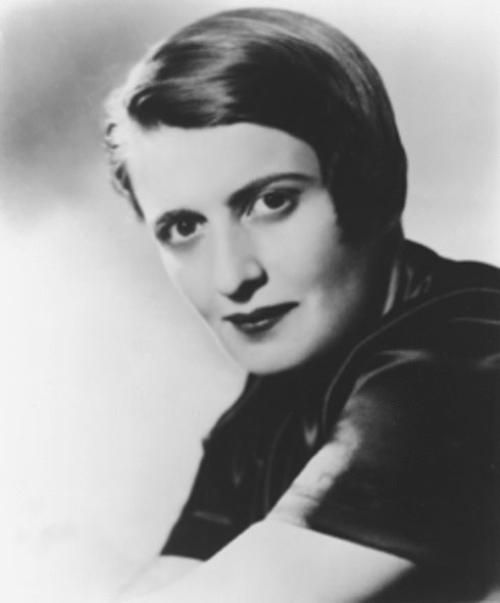 Afbeelding afkomstig van University of Georgia Afbeelding afkomstig van University of Georgia
| |
| Externe links | |
| Geo | |
Terug naar Filosofie
 The Fountainhead movie Howard Roark Speech
  Part 1
| Bronnen, noten en/of referenties: |
|