Michel de Montaigne (1533-1592): verschil tussen versies
Geen bewerkingssamenvatting |
Geen bewerkingssamenvatting |
||
| Regel 10: | Regel 10: | ||
|semantic:naam=Montaigne, Michel de (1533-1592) | |semantic:naam=Montaigne, Michel de (1533-1592) | ||
|semantic:achternaam=Montaigne | |semantic:achternaam=Montaigne | ||
|semantic:image={{imsr}}kHkJFVht.jpg | |semantic:image={{mdsr:imsr}}kHkJFVht.jpg | ||
}}{{sys:back|page=Filosofie}} | }}{{sys:back|page=Filosofie}} | ||
| Regel 25: | Regel 25: | ||
}}{{#tag:easytree| | }}{{#tag:easytree| | ||
Media | Media | ||
:{{#tag:easyview|mnx4Lt2EFqA|group=media|type=youtube|thumbnail=2013 - {{ | :{{#tag:easyview|mnx4Lt2EFqA|group=media|type=youtube|thumbnail=2013 - {{mdsr:icon}}media/audio.png Michel de Montaigne (1533-1592)|head=[http://www.youtube.com/watch?v=mnx4Lt2EFqA Michel de Montaigne (1533-1592)]|des=Michel de Montaigne is widely appreciated as one of the most important figures in the late French Renaissance, both for his literary innovations as well as for his contributions to philosophy. As a writer, he is credited with having developed a new form of literary expression, the essay, a brief and admittedly incomplete treatment of a topic germane to human life that blends philosophical insights with historical anecdotes and autobiographical details, all unapologetically presented from the author's own personal perspective. As a philosopher, he is best known for his skepticism, which profoundly influenced major figures in the history of philosophy such as Descartes and Pascal. | ||
[br][br] | [br][br] | ||
All of his literary and philosophical work is contained in his Essays, which he began to write in 1572 and first published in 1580 in the form of two books. Over the next twelve years leading up to his death, he made additions to the first two books and completed a third, bringing the work to a length of about one thousand pages. While Montaigne made numerous additions to the book over the years, he never deleted or removed any material previously published, in an effort to represent accurately the changes that he underwent both as a thinker and as a person over the twenty years during which he wrote. These additions add to the unsystematic character of the book, which Montaigne himself claimed included many contradictions. It is no doubt due to the unsystematic nature of the Essays that Montaigne received relatively little attention from Anglo-American philosophers in the twentieth century. Nonetheless, in recent years he has been held out by many as an important figure in the history of philosophy not only for his skepticism, but also for his treatment of topics such as the self, moral relativism, politics, and the nature of philosophy.|ref=Video afkomstig van [http://www.youtube.com/user/pangeaprogressredux pangeaprogressredux]}} | All of his literary and philosophical work is contained in his Essays, which he began to write in 1572 and first published in 1580 in the form of two books. Over the next twelve years leading up to his death, he made additions to the first two books and completed a third, bringing the work to a length of about one thousand pages. While Montaigne made numerous additions to the book over the years, he never deleted or removed any material previously published, in an effort to represent accurately the changes that he underwent both as a thinker and as a person over the twenty years during which he wrote. These additions add to the unsystematic character of the book, which Montaigne himself claimed included many contradictions. It is no doubt due to the unsystematic nature of the Essays that Montaigne received relatively little attention from Anglo-American philosophers in the twentieth century. Nonetheless, in recent years he has been held out by many as an important figure in the history of philosophy not only for his skepticism, but also for his treatment of topics such as the self, moral relativism, politics, and the nature of philosophy.|ref=Video afkomstig van [http://www.youtube.com/user/pangeaprogressredux pangeaprogressredux]}} | ||
:{{#tag:easyview|0wBf-7vF3Jk|group=media|type=youtube|thumbnail=2013 - {{ | :{{#tag:easyview|0wBf-7vF3Jk|group=media|type=youtube|thumbnail=2013 - {{mdsr:icon}}media/video.png Klassiker der Weltliteratur: Michel de Montaigne - Essais | BR-alpha|head=[http://www.youtube.com/watch?v=0wBf-7vF3Jk Klassiker der Weltliteratur: Michel de Montaigne - Essais BR-alpha]|des=Michel de Montaigne, Denker und Schriftsteller des 16. Jahrhunderts, wollte die Dinge der Welt aus seiner eigenen Perspektive darstellen. Mit dieser Sichtweise schuf er eine neue Gattung in der Literatur: die Kunst des Essays. | ||
[br][br] | [br][br] | ||
Moderation: Tilman Spengler[br] | Moderation: Tilman Spengler[br] | ||
| Regel 34: | Regel 34: | ||
:{{#tag:easyview|https://www.youtube.com/watch?v=wOtDS9I0Cro|group=media|type=iframe|thumbnail=2013 - ARTE - Philosophie - Michel de Montaigne (deutsch) (1/2)|direct=true}} | :{{#tag:easyview|https://www.youtube.com/watch?v=wOtDS9I0Cro|group=media|type=iframe|thumbnail=2013 - ARTE - Philosophie - Michel de Montaigne (deutsch) (1/2)|direct=true}} | ||
:{{#tag:easyview|https://www.youtube.com/watch?v=A9R5u9zo7jA|group=media|type=iframe|thumbnail=2013 - ARTE - Philosophie - Michel de Montaigne (deutsch) (2/2)|direct=true}} | :{{#tag:easyview|https://www.youtube.com/watch?v=A9R5u9zo7jA|group=media|type=iframe|thumbnail=2013 - ARTE - Philosophie - Michel de Montaigne (deutsch) (2/2)|direct=true}} | ||
:{{#tag:easyview|XRbGtom9YhA|group=media|type=youtube|thumbnail=2013 - {{ | :{{#tag:easyview|XRbGtom9YhA|group=media|type=youtube|thumbnail=2013 - {{mdsr:icon}}media/video.png Michel de Montaigne - Freundschaft und Fülle des Lebens|head=[http://www.youtube.com/watch?v=XRbGtom9YhA Michel de Montaigne - Freundschaft und Fülle des Lebens]|des=Michel de Montaigne - Freundschaft und Fülle des Lebens[br] | ||
von Christine Pitzke; BR Rundfunk[br] | von Christine Pitzke; BR Rundfunk[br] | ||
Frankreich im 16. Jahrhundert: Zeit der Religionskriege, Friedensschlüsse, denen nicht zu trauen ist. Auch vor diesem Hintergrund müssen die Essais von Michel de Montaigne (1533-1592) gelesen werden. Sein äußeres Leben war wenig spektakulär: Geboren wurde er auf Schloss Montaigne als Sohn einer adeligen Kaufmannsfamilie, er studierte Rechte, wurde Parlamentsrat und später Bürgermeister von Bordeaux, seine (wenigen) Reisen führten ihn nach Lothringen, Süddeutschland, in die Schweiz und nach Italien. Ein Mann der öffentlichen Ämter, der in seinem Schlossturm von Montaigne Zuflucht nahm und dort im Laufe von 20 Jahren ein einzigartiges Werk schuf: Essais, das sind Versuche, durch (Selbst)Reflexion Antworten vorzuschlagen zu Fragen des täglichen Lebens.[br] | Frankreich im 16. Jahrhundert: Zeit der Religionskriege, Friedensschlüsse, denen nicht zu trauen ist. Auch vor diesem Hintergrund müssen die Essais von Michel de Montaigne (1533-1592) gelesen werden. Sein äußeres Leben war wenig spektakulär: Geboren wurde er auf Schloss Montaigne als Sohn einer adeligen Kaufmannsfamilie, er studierte Rechte, wurde Parlamentsrat und später Bürgermeister von Bordeaux, seine (wenigen) Reisen führten ihn nach Lothringen, Süddeutschland, in die Schweiz und nach Italien. Ein Mann der öffentlichen Ämter, der in seinem Schlossturm von Montaigne Zuflucht nahm und dort im Laufe von 20 Jahren ein einzigartiges Werk schuf: Essais, das sind Versuche, durch (Selbst)Reflexion Antworten vorzuschlagen zu Fragen des täglichen Lebens.[br] | ||
"Jedermann schaut von sich weg, ich schaue in mich hinein". Entstanden ist dabei das Zeugnis einer Lebhaftigkeit und Beweglichkeit des Geistes, immer wieder neu ansetzend, schonungslos, ohne Selbststilisierung: Drei Bücher mit insgesamt 107 Kapiteln, darunter "Über die Furcht", "Über die Freundschaft", "Über die Erfahrung". Entstanden ist dabei auch das Zeugnis einer Einwilligung ins Leben mit seiner ganzen Fülle an Wollust, Leiden, Wirrnis, Paradoxien, Freude. Subjektivität und Beweglichkeit, gerade das machte Montaigne zu einem Begründer der modernen Literatur - und zu einem zeitlosen Autor.|ref=Video afkomstig van [http://www.youtube.com/user/Sibidumbap Sibidumbap]}} | "Jedermann schaut von sich weg, ich schaue in mich hinein". Entstanden ist dabei das Zeugnis einer Lebhaftigkeit und Beweglichkeit des Geistes, immer wieder neu ansetzend, schonungslos, ohne Selbststilisierung: Drei Bücher mit insgesamt 107 Kapiteln, darunter "Über die Furcht", "Über die Freundschaft", "Über die Erfahrung". Entstanden ist dabei auch das Zeugnis einer Einwilligung ins Leben mit seiner ganzen Fülle an Wollust, Leiden, Wirrnis, Paradoxien, Freude. Subjektivität und Beweglichkeit, gerade das machte Montaigne zu einem Begründer der modernen Literatur - und zu einem zeitlosen Autor.|ref=Video afkomstig van [http://www.youtube.com/user/Sibidumbap Sibidumbap]}} | ||
:{{#tag:easyview|BOjDttEtfGI|group=media|type=youtube|thumbnail=2012 - {{ | :{{#tag:easyview|BOjDttEtfGI|group=media|type=youtube|thumbnail=2012 - {{mdsr:icon}}media/video.png 04 - Montaigne on Self-Esteem - Philosophy: A Guide to Happiness|head=[http://www.youtube.com/watch?v=BOjDttEtfGI 04 - Montaigne on Self-Esteem - Philosophy: A Guide to Happiness]|des=This six part series on philosophy is presented by popular British philosopher Alain de Botton, featuring six thinkers who have influenced history, and their ideas about the pursuit of the happy life. [br][br]Episode 4: Montaigne on Self-Esteem looks at the problem of self-esteem from the perspective of Michel de Montaigne (16th Century), the French philosopher who singled out three main reasons for feeling bad about oneself - sexual inadequecy, failure to live up to social norms, and intellectual inferiority - and then offered practical solutions for overcoming them.|ref=Video afkomstig van [http://www.youtube.com/user/spookybuk spookybuk]}} | ||
:{{#tag:easyview|YG9JGgu-yKg|group=media|type=youtube|thumbnail=2011 - {{ | :{{#tag:easyview|YG9JGgu-yKg|group=media|type=youtube|thumbnail=2011 - {{mdsr:icon}}media/video.png Denker des Abendlandes - 29 - Der Weg zur Aufklärung - Montaigne, Pascal, Voltaire|head=[http://www.youtube.com/watch?v=YG9JGgu-yKg Denker des Abendlandes - 29 - Der Weg zur Aufklärung - Montaigne, Pascal, Voltaire]|des=Auf dem Weg zur Aufklärung gab es drei wichtige Männer: Michel Eyquem de Montaigne, Blaise Pascal und Voltaire. [{{sys:w:de}}Harald_Lesch Harald Lesch] und [{{sys:w:de}}Wilhelm_Vossenkuhl Wilhelm Vossenkuhl] stellen diese spannenden Persönlichkeiten vor.||ref=Video afkomstig van [http://www.youtube.com/user/HUMANKYBERNETIK Daniel Michel]}} | ||
:[https://www.youtube.com/watch?v=noxJfAQSbTQ&list=PLB1FEDF3B16BD66A9 2011 - Essais] | :[https://www.youtube.com/watch?v=noxJfAQSbTQ&list=PLB1FEDF3B16BD66A9 2011 - Essais] | ||
|size=18 | |size=18 | ||
Versie van 27 dec 2025 17:33
| Michel de Montaigne | |
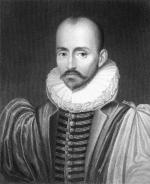
| Afbeelding https://mdsr.webemotion.nl/imsr/i/kHkJFVh.jpg bestaat nietAfbeelding afkomstig van Dave Disselkamp | |
| Externe links | |
| Geo | |
Terug naar Filosofie
 Michel de Montaigne (1533-1592)
 Klassiker der Weltliteratur: Michel de Montaigne - Essais