Martha Nussbaum (1947-): verschil tussen versies
Geen bewerkingssamenvatting |
Geen bewerkingssamenvatting |
||
| Regel 8: | Regel 8: | ||
{{sys:dictionary|category={{sys:titlepart}}}}{{#tag:easytree| | {{sys:dictionary|category={{sys:titlepart}}}}{{#tag:easytree| | ||
Literatuur | Literatuur | ||
:{{#tag:easyview|http://books.google.nl/books?id=ISD05P7TcOAC&lpg=PP1&hl=nl&pg=PP1&output=embed|thumbnail=1978 - Aristotle's De motu animalium {{sys:w:lang:en}}|group=literature|type=iframe}} {{#tag:easyview|http://www.ncbi.nlm.nih.gov/pmc/articles/PMC1082639/?page=1|thumbnail={{ | :{{#tag:easyview|http://books.google.nl/books?id=ISD05P7TcOAC&lpg=PP1&hl=nl&pg=PP1&output=embed|thumbnail=1978 - Aristotle's De motu animalium {{sys:w:lang:en}}|group=literature|type=iframe}} {{#tag:easyview|http://www.ncbi.nlm.nih.gov/pmc/articles/PMC1082639/?page=1|thumbnail={{mdsr:icon}}media/review.png {{sys:w:lang:en}}|title=Naar de boek recensie?|group=literature|type=iframe}} | ||
:{{#tag:easyview|http://humweb.ucsc.edu/literature/course_materials_literature/documents/Week7-TheFragilityofGoodness_000.pdf|thumbnail=1986 - The fragility of goodness {{sys:w:lang:en}}|group=literature|type=iframe}} {{#tag:easyview|http://bmcr.brynmawr.edu/2002/2002-10-06.html|thumbnail={{ | :{{#tag:easyview|http://humweb.ucsc.edu/literature/course_materials_literature/documents/Week7-TheFragilityofGoodness_000.pdf|thumbnail=1986 - The fragility of goodness {{sys:w:lang:en}}|group=literature|type=iframe}} {{#tag:easyview|http://bmcr.brynmawr.edu/2002/2002-10-06.html|thumbnail={{mdsr:icon}}media/review.png {{sys:w:lang:en}}|group=literature|title=Naar de boek recensie?| {{sys:w:lang:en}}type=iframe}} | ||
:{{#tag:easyview|http://philosophy.wisc.edu/hunt/nussbuchasashrt.htm|thumbnail=1996 - {{ | :{{#tag:easyview|http://philosophy.wisc.edu/hunt/nussbuchasashrt.htm|thumbnail=1996 - {{mdsr:icon}}media/review.png Poetic Justice {{sys:w:lang:en}}|group=literature|title=Naar de boek recensie?|type=iframe}} | ||
|size=18 | |size=18 | ||
}}{{#tag:easytree| | }}{{#tag:easytree| | ||
| Regel 19: | Regel 19: | ||
}}{{#tag:easytree| | }}{{#tag:easytree| | ||
Media | Media | ||
:{{#tag:easyview|j_CK55Zni0M|type=youtube|group=lichtpunt|head=[https://www.youtube.com/watch?v=j_CK55Zni0M 2015 - Lichtpunt Martha Nussbaum]|thumbnail=2015 - {{ | :{{#tag:easyview|j_CK55Zni0M|type=youtube|group=lichtpunt|head=[https://www.youtube.com/watch?v=j_CK55Zni0M 2015 - Lichtpunt Martha Nussbaum]|thumbnail=2015 - {{mdsr:icon}}media/video.png Lichtpunt Martha Nussbaum {{sys:w:lang:nl}}|ref=Afbeelding afkomstig van [https://www.youtube.com/channel/UCRFXkIsR8-BrrvfTc1Iv_hQ Titus Rivas]}} | ||
:2008 - On Aristotle | :2008 - On Aristotle | ||
::{{#tag:easyview|uNIPAwZVqb4|type=youtube|group=aristoteles|head=On Aristotle: Section 1|des=In this program, the far-reaching philosophical ideas of Plato's star pupil are examined by noted Brown University professor Martha Nussbaum. Aristotle overcomes Plato's dualism of the intelligible and sensible worlds with his principle of inseparable nature of eternal matter and form. The principles of potentiality and actuality are examined, along with Aristotle's theory of the four causes—material, formal, efficient, and final—which account for changes in all things. These theories of constancy and change are credited with the progress of scientific inquiry over the ages.|thumbnail={{ | ::{{#tag:easyview|uNIPAwZVqb4|type=youtube|group=aristoteles|head=On Aristotle: Section 1|des=In this program, the far-reaching philosophical ideas of Plato's star pupil are examined by noted Brown University professor Martha Nussbaum. Aristotle overcomes Plato's dualism of the intelligible and sensible worlds with his principle of inseparable nature of eternal matter and form. The principles of potentiality and actuality are examined, along with Aristotle's theory of the four causes—material, formal, efficient, and final—which account for changes in all things. These theories of constancy and change are credited with the progress of scientific inquiry over the ages.|thumbnail={{mdsr:icon}}media/video.png Section 1 {{sys:w:lang:en}}|ref=Afbeelding afkomstig van [http://www.youtube.com/user/flame0430 flame0430]}} | ||
::{{#tag:easyview|p16vMGXTS80|type=youtube|group=aristoteles|head=On Aristotle: Section 2| des=In this program, the far-reaching philosophical ideas of Plato's star pupil are examined by noted Brown University professor Martha Nussbaum. Aristotle overcomes Plato's dualism of the intelligible and sensible worlds with his principle of inseparable nature of eternal matter and form. The principles of potentiality and actuality are examined, along with Aristotle's theory of the four causes—material, formal, efficient, and final—which account for changes in all things. These theories of constancy and change are credited with the progress of scientific inquiry over the ages.|thumbnail={{ | ::{{#tag:easyview|p16vMGXTS80|type=youtube|group=aristoteles|head=On Aristotle: Section 2| des=In this program, the far-reaching philosophical ideas of Plato's star pupil are examined by noted Brown University professor Martha Nussbaum. Aristotle overcomes Plato's dualism of the intelligible and sensible worlds with his principle of inseparable nature of eternal matter and form. The principles of potentiality and actuality are examined, along with Aristotle's theory of the four causes—material, formal, efficient, and final—which account for changes in all things. These theories of constancy and change are credited with the progress of scientific inquiry over the ages.|thumbnail={{mdsr:icon}}media/video.png Section 2 {{sys:w:lang:en}}||ref=Afbeelding afkomstig van [http://www.youtube.com/user/flame0430 flame0430]}} | ||
:{{#tag:easyview|A_IR1ClD3Ns|type=youtube|group=hum|head=2010 - Humanistic Education & Global Justice| thumbnail=2010 - {{ | :{{#tag:easyview|A_IR1ClD3Ns|type=youtube|group=hum|head=2010 - Humanistic Education & Global Justice| thumbnail=2010 - {{mdsr:icon}}media/video.png Humanistic Education & Global Justice {{sys:w:lang:en}}|des=The Seymour Fox Memorial Lecture: Sunday, 16 December 2007 Ernst Freund Distinguished Service Professor of Law and Ethics, The University of Chicago Law School. 'Humanistic Education and Global Justice'|ref=Afbeelding afkomstig van [http://www.youtube.com/user/HebrewUniversity HebrewUniversity]}} | ||
:{{#tag:easyview|vY7TWiZlLt4|type=youtube|head=2010 - On 21st Century Enlightenment|des=Matthew Taylor and Martha Nussbaum discuss ways in which the attitudes, values and practices of 21stC enlightenment could help more of us lead the good life in the good society.|thumbnail=2010 - {{ | :{{#tag:easyview|vY7TWiZlLt4|type=youtube|head=2010 - On 21st Century Enlightenment|des=Matthew Taylor and Martha Nussbaum discuss ways in which the attitudes, values and practices of 21stC enlightenment could help more of us lead the good life in the good society.|thumbnail=2010 - {{mdsr:icon}}media/video.png On 21st Century Enlightenment| {{sys:w:lang:en}}|ref=Afbeelding afkomstig van [http://www.youtube.com/user/theRSAorg RSA]}} | ||
:{{#tag:easyview|Qy3YTzYjut4|type=youtube|group=Conversations with History|head=2006 - Conversations with History|thumbnail=2006 - {{ | :{{#tag:easyview|Qy3YTzYjut4|type=youtube|group=Conversations with History|head=2006 - Conversations with History|thumbnail=2006 - {{mdsr:icon}}media/video.png Conversations with History {{sys:w:lang:en}}|des=Conversations Host Harry Kreisler welcomes philosopher Martha Nussbaum for a discussion of women and human development, religious freedom, and liberal education. Series: 'Conversations with History' [11/2006] [Public Affairs] [Show ID: 11984]|ref=Afbeelding afkomstig van [http://www.youtube.com/user/UCtelevision UCtelevision]}} | ||
:{{#tag:easyview|7Oir5YC3NW8|type=youtube|group=Equal Liberty of Conscience|head=2007 - Equal Liberty of Conscience|thumbnail=2007 - {{ | :{{#tag:easyview|7Oir5YC3NW8|type=youtube|group=Equal Liberty of Conscience|head=2007 - Equal Liberty of Conscience|thumbnail=2007 - {{mdsr:icon}}media/video.png Equal Liberty of Conscience {{sys:w:lang:en}}|des=University of Chicago Law Professor Martha Nussbaum traces the philosophical and historical origins of the American tradition of liberty of conscience by looking at the career and writings of Roger Williams, founder of Rhode Island and author of important works about religious freedom. Series: 'UC Berkeley Graduate Council Lectures' [2/2007] [Humanities] [Show ID: 11996]|ref=Afbeelding afkomstig van [http://www.youtube.com/user/UCtelevision UCtelevision]}} | ||
:{{#tag:easyview|jETAKW2U1Ww|type=youtube|group=The Fragility of Humanity|head=2011 - The Fragility of Humanity|thumbnail=2011 - {{ | :{{#tag:easyview|jETAKW2U1Ww|type=youtube|group=The Fragility of Humanity|head=2011 - The Fragility of Humanity|thumbnail=2011 - {{mdsr:icon}}media/video.png The Fragility of Humanity {{sys:w:lang:en}}|des='I have found power in the mysteries of thought,exaltation in the changing of the Muses;'[br]'I have been versed in the reasonings of men; but Fate is stronger than anything I have known.' [http://nl.wikipedia.org/wiki/Euripides Euripides], [http://nl.wikipedia.org/wiki/Alkestis_(mythologisch_figuur) Alcestis], 438 B.C.[br]'When you get a person to look at the sun as it bakes down on the daily carnage taking place on earth, the ridiculous accidents, the utter fragility of life, the powerlessness of those he thought most powerful—what comfort can you give him from a psychotherapeutic point of view?' --Ernest Becker[br]The analysis of disgust and shame...shows us that human beings typically have a problematic relationship to their mortality and animality, and that this problematic relationship causes not just inner tension, but also aggression toward others. If ideals of respect and reciprocity are to have a chance of prevailing, they must contend against the forces of narcissism and misanthropy that these emotions so frequently involve.-Hiding from Humanity by Martha Nussbaum[br]The Fragility of Goodness[br]Luck and Ethics in Greek Tragedy and Philosophy:[br][http://www.amazon.com/Fragility-Goodness-Ethics-Tragedy-Philosophy/dp/0521794722 The Fragility of Goodness: Luck and Ethics in Greek Tragedy and Philosophy][br]This book is a study of ancient views about moral luck. It examines the fundamental ethical problem that many of the valued constituents of a well-lived life are vulnerable to factors outside a persons control, and asks how this affects our appraisal of persons and their lives.[br]Ernest Becker noted, In the world of ritual there arent any accidents, and accidents, as we know, are the things that make life most precarious and meaningless...if life can be so subject to chance, it must n't have too much meaning.[br]Nussbaum on Pindar : The excellence of the good person, he writes, is like a young plant: something growing in the world, slender, fragile, in constant need of food from without. A vine tree must be of good stock if it is to grow well. And even if it has a good heritage, it needs fostering weather (gentle dew an drain, the absence of sudden frosts and harsh winds), as well as the care of concerned and intelligent keepers, for its continued health and full perfection. |ref=Afbeelding afkomstig van [http://www.youtube.com/user/UCtelevision UCtelevision]}} | ||
|size=18 | |size=18 | ||
}} | }} | ||
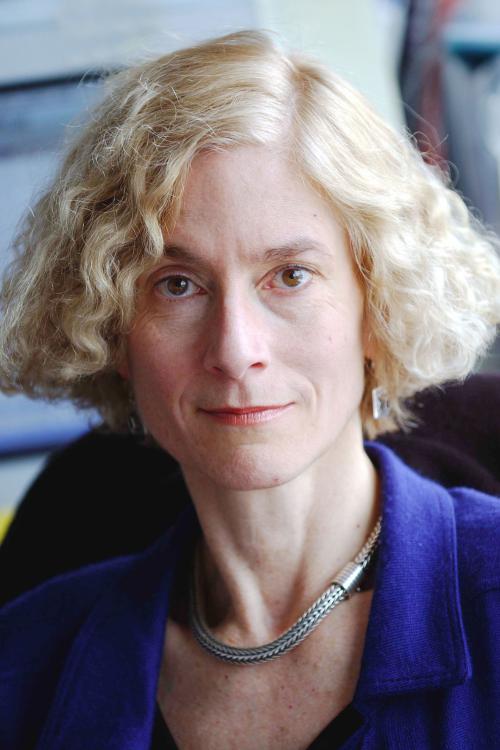

 Lichtpunt Martha Nussbaum