Slavoj Žižek (1949-): verschil tussen versies
Geen bewerkingssamenvatting |
Geen bewerkingssamenvatting |
||
| Regel 14: | Regel 14: | ||
}}{{#tag:easytree| | }}{{#tag:easytree| | ||
Media | Media | ||
:{{#tag:easyview|s5PigZzSAJo|type=youtube|thumbnail= {{ | :{{#tag:easyview|s5PigZzSAJo|type=youtube|thumbnail= {{mdsr:icon}}media/video.png 2016 -Slavoj Žižek on Refugees, Conservatism, and Cultural Incompatibility|head=[https://www.youtube.com/watch?v=XS_Lzo4S8lA 2016- Slavoj Žižek on Refugees, Conservatism, and Cultural Incompatibilityj Zizek]|ref=Video afkomstig van [https://www.youtube.com/channel/UCvQECJukTDE2i6aCoMnS-Vg Big Think]}} | ||
:{{#tag:easyview|XS_Lzo4S8lA|type=youtube|thumbnail= {{ | :{{#tag:easyview|XS_Lzo4S8lA|type=youtube|thumbnail= {{mdsr:icon}}media/video.png 2013 -Vice Meets Superstar Communist Slavoj Zizek|head=[https://www.youtube.com/watch?v=XS_Lzo4S8lA Vice Meets Superstar Communist Slavoj Zizek]|ref=Video afkomstig van [https://www.youtube.com/channel/UCn8zNIfYAQNdrFRrr8oibKw Vice]}} | ||
:{{#tag:easyview|xWy3pkiLOOU|type=youtube|thumbnail= {{ | :{{#tag:easyview|xWy3pkiLOOU|type=youtube|thumbnail= {{mdsr:icon}}media/video.png 2013 -The twentieth century is over|head=2013 - The twentieth century is over.|des=Perhaps the most succinct characterization of the epoch which began with the First World War is the well-known phrase attributed to Gramsci: "The old world is dying away, and the new world struggles to come forth: now is the time of monsters." Were Fascism and Stalinism not the twin monsters of the twentieth century, the one emerging out of the old world's desperate attempts to survive, the other out of a misbegotten endeavor to build a new one? And what about the monsters we are engendering now, propelled by techno-gnostic dreams of a biogenetically controlled society? All the consequences should be drawn from this paradox: perhaps there is no direct passage to the New, at least not in the way we imagined it, and monsters necessarily emerge in any attempt to force that passage. | ||
<br> | <br> | ||
Our situation is the very opposite of the classical twentieth-century predicament in which the Left knew what it had to do (establish the dictatorship of the proletariat, etc.), but simply had to wait patiently for the opportunity to offer itself. Today, we do not know what we have to do, but we have to act now, because the consequences of inaction could be catastrophic. We will have to risk taking steps into the abyss of the New in totally inappropriate situations; we will have to reinvent aspects of the New just in order to maintain what was good in the Old (education, healthcare, etc.). The journal in which Gramsci published his writings in the early 1920s was called L'Ordine nuovo (The New Order)—a title which was later appropriated by the extreme Right. Rather than seeing this later appropriation as revealing the "truth" of Gramsci's use of the title—abandoning it as running counter to the rebellious freedom of an authentic Left—we should return to it as an index of the hard problem of defining the new order any revolution will have to establish after its success. In short, our times can be characterized as none other than Stalin characterized the atom bomb: not for those with weak nerves. | Our situation is the very opposite of the classical twentieth-century predicament in which the Left knew what it had to do (establish the dictatorship of the proletariat, etc.), but simply had to wait patiently for the opportunity to offer itself. Today, we do not know what we have to do, but we have to act now, because the consequences of inaction could be catastrophic. We will have to risk taking steps into the abyss of the New in totally inappropriate situations; we will have to reinvent aspects of the New just in order to maintain what was good in the Old (education, healthcare, etc.). The journal in which Gramsci published his writings in the early 1920s was called L'Ordine nuovo (The New Order)—a title which was later appropriated by the extreme Right. Rather than seeing this later appropriation as revealing the "truth" of Gramsci's use of the title—abandoning it as running counter to the rebellious freedom of an authentic Left—we should return to it as an index of the hard problem of defining the new order any revolution will have to establish after its success. In short, our times can be characterized as none other than Stalin characterized the atom bomb: not for those with weak nerves. | ||
<br> | <br> | ||
Communism is today not the name of a solution but the name of a PROBLEM: the problem of the COMMONS in all its dimensions—the commons of nature as the substance of our life, the problem of our biogenetic commons, the problem of our cultural commons ("intellectual property"), and, last but not least, the problem of the commons as that universal space of humanity from which no one should be excluded. Whatever the solution might be, it will have to solve THIS problem.|ref=Video afkomstig van [https://www.youtube.com/user/arlindbosh arlindbosh]}} | Communism is today not the name of a solution but the name of a PROBLEM: the problem of the COMMONS in all its dimensions—the commons of nature as the substance of our life, the problem of our biogenetic commons, the problem of our cultural commons ("intellectual property"), and, last but not least, the problem of the commons as that universal space of humanity from which no one should be excluded. Whatever the solution might be, it will have to solve THIS problem.|ref=Video afkomstig van [https://www.youtube.com/user/arlindbosh arlindbosh]}} | ||
:{{#tag:easyview|OYBzpRWaAuA|type=youtube|thumbnail= {{ | :{{#tag:easyview|OYBzpRWaAuA|type=youtube|thumbnail={{mdsr:icon}}media/video.png 2013 - Understanding the New European Nationalism s appeal.|head=2013 - Understanding the New European Nationalism s appeal.|ref=Video afkomstig van [https://www.youtube.com/user/AmetReloads?feature=watch Satyroll]}} | ||
:{{#tag:easyview|UwYLaX5_ZQA|type=youtube|thumbnail= {{ | :{{#tag:easyview|UwYLaX5_ZQA|type=youtube|thumbnail={{mdsr:icon}}media/video.png 2013 - Are Catastrophes Virtual?|head=Amazing lecture of Slavoj Zizek in the Penn Humanities Forum.|ref=Video afkomstig van [https://www.youtube.com/channel/UCo_s4Y0MK0OK_dZdtBK08sg?feature=watch Slavoj Zizek]}} | ||
:{{#tag:easyview|WuT2VarnzSw|type=youtube|thumbnail= {{ | :{{#tag:easyview|WuT2VarnzSw|type=youtube|thumbnail={{mdsr:icon}}media/video.png 2013 - The Structure of Toilets|head=2013 - The Structure of Toilets|ref=Video afkomstig van [https://www.youtube.com/channel/UCo_s4Y0MK0OK_dZdtBK08sg?feature=watch Slavoj Zizek]}} | ||
:{{#tag:easyview|IgR6uaVqWsQ|type=youtube|thumbnail= {{ | :{{#tag:easyview|IgR6uaVqWsQ|type=youtube|thumbnail={{mdsr:icon}}media/video.png 2012 - Don't Act. Just Think|head=2013 - Don't Act. Just Think|des=[https://bigthink.com/videos/dont-act-just-think Transcriptie]|ref=Video afkomstig van [https://www.youtube.com/channel/bigthink bigthink]}} | ||
:{{#tag:easyview|kugiufHh800|type=youtube|thumbnail= {{ | :{{#tag:easyview|kugiufHh800|type=youtube|thumbnail= {{mdsr:icon}}media/video.png 2012 - Welcome to the Desert of Post-Ideology|head=2012 - Welcome to the Desert of Post-Ideology|des=Slavoj Žižek, the internationally renowned philosopher and cultural critic featured in the Sophie Fiennes-directed The Pervert's Guide to Ideology and The Pervert's Guide to Cinema, delivers a lecture entitled Welcome to the Desert of Post-Ideology for post-secondary students and faculty. This Higher Learning event was co-presented with York University and held on October 2, 2012 at TIFF Bell Lightbox.|ref=Video afkomstig van [https://www.youtube.com/user/tiff Tiff]}} | ||
:{{#tag:easyview|sQ3g2zS6Tuk|type=youtube|thumbnail={{ | :{{#tag:easyview|sQ3g2zS6Tuk|type=youtube|thumbnail={{mdsr:icon}}media/video.png 2012 - God in Pain: Inversions of Apocalypse conversation with Jack Miller|head=2012 - God in Pain: Inversions of Apocalypse conversation with Jack Miller|des=Slavoj Zizek, renowned Slovenian critical theorist, dissects and reconstructs three major faith-based systems of belief in the world today, showing how each faith understands humanity and divinity-and how the differences between the faiths may be far stranger than they at first seem.[br][br][[{{sys:w:nl}}Jack Miles|Jack Miles]] is Senior Fellow for Religious Affairs with the Pacific Council on International Policy and Distinguished Professor of English and Religious Studies, University of California, Irvine. A MacArthur Fellow (2003-2007), Miles won the Pulitzer Prize in 1996 for God: A Biography, which has since been translated into sixteen languages. He is currently general editor of the forthcoming Norton Anthology of World Religions.|ref=Video afkomstig van [https://www.youtube.com/user/TheEthanwashere TheEthanwashere]}} | ||
:{{#tag:easyview|Gw8LPn4irao|type=youtube|thumbnail={{ | :{{#tag:easyview|Gw8LPn4irao|type=youtube|thumbnail={{mdsr:icon}}media/video.png Agenda 2010: Leven in het einde der tijden volgens Slavoj Zižek|head=Agenda 2010: Leven in het einde der tijden volgens Slavoj Zižek|ref=Video afkomstig van [https://tegenlicht.vpro.nl/backlight/Living-in-the-end-times-according-to-slavoj-zizek.html VPRO tegenlicht]}} | ||
:{{#tag:easyview|6Qhk8az8K-Y|type=youtube|thumbnail= {{ | :{{#tag:easyview|6Qhk8az8K-Y|type=youtube|thumbnail={{mdsr:icon}}media/video.png 2011 - Talk to Al Jazeera|head=2011 - Talk to Al Jazeera|des=The Slovenian philosopher and critical theorist talks to Al Jazeera about the momentous changes taking place in the global financial and political system.|ref=Video afkomstig van [https://www.youtube.com/user/AlJazeeraEnglish AlJazeeraEnglish]}} | ||
:{{#tag:easyview|DlHpNXP7IA0|type=youtube|thumbnail= {{ | :{{#tag:easyview|DlHpNXP7IA0|type=youtube|thumbnail={{mdsr:icon}}media/video.png 2008 - Ideology of Violence|head=2008 - Ideology of Violence|head=[https://www.youtube.com/watch?v=DlHpNXP7IA0 2008 - Ideology of Violence]|ref=Video afkomstig van [https://www.youtube.com/user/EducateKnowledge?feature=watch EducateKnowledge]}} | ||
|size=18 | |size=18 | ||
}}{{sys:dictionary|category={{sys:titlepart}}}} | }}{{sys:dictionary|category={{sys:titlepart}}}} | ||
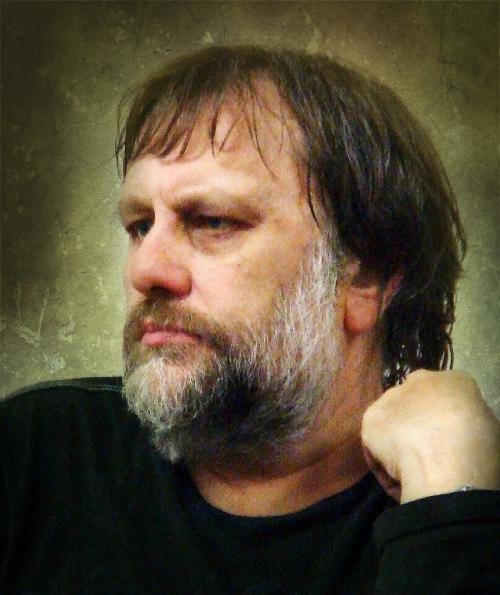
 2016 -Slavoj Žižek on Refugees, Conservatism, and Cultural Incompatibility